Author: Mulshi Tourism Desk
|
3 Mins Read
•
August 20, 2024
Mula-Mutha River Sanctuary
The Life-Giving Mula–Mutha Rivers of Mulshi
Rivers That Shaped the Land and Its Heritage
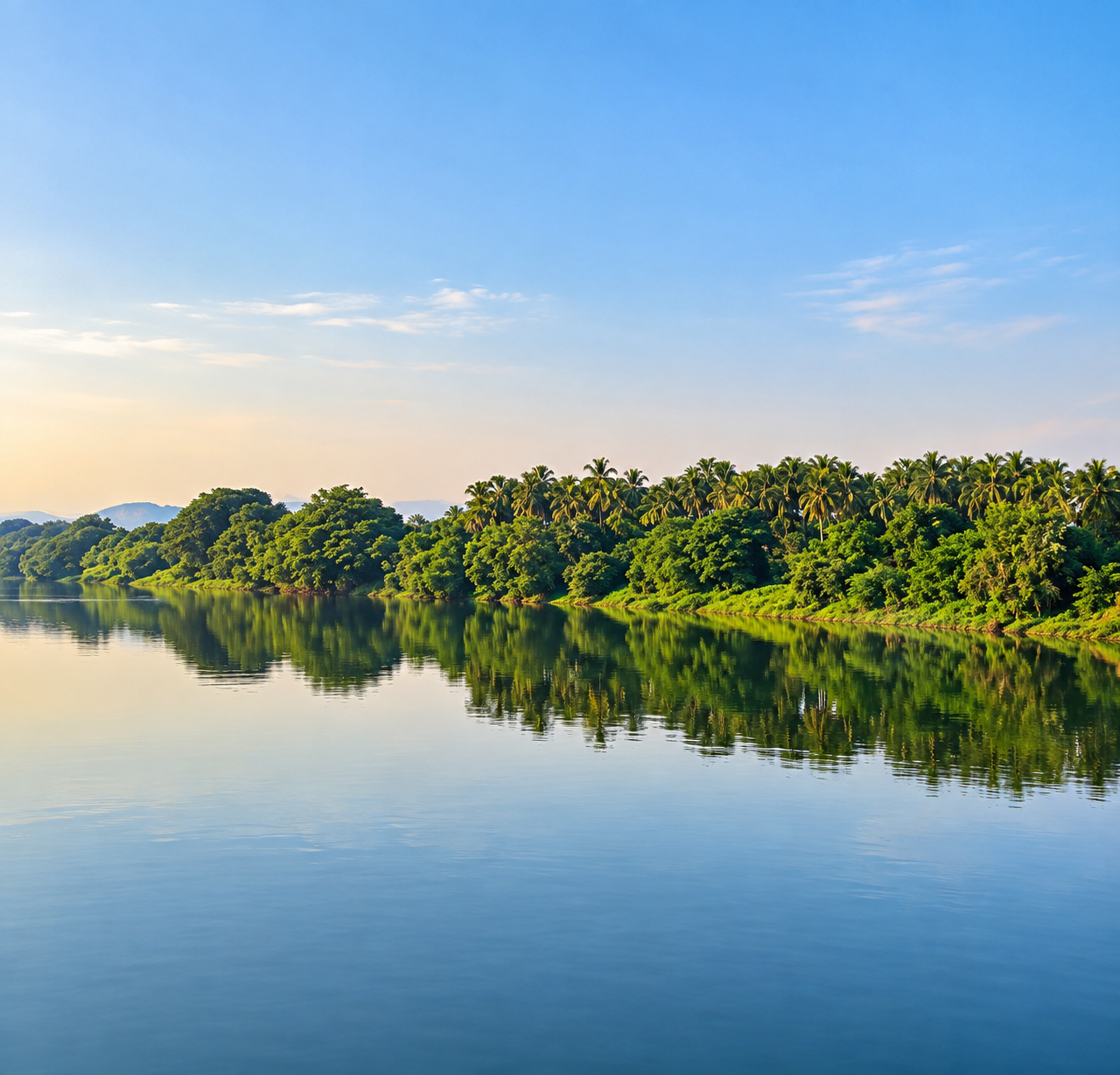
The Mula and Mutha rivers are two of the most important waterways associated with Mulshi Taluka. Beyond providing water to the region, these rivers are closely connected with local traditions, folklore, ancient texts, and the history of the surrounding settlements.
The ancient text Bhima Mahatmya, attributed in this tradition to the poet Dattakinkar, describes the glory of the Bhima River and narrates stories associated with its tributaries. The 26th chapter specifically mentions the meeting of the Mula, Mutha and Bhima rivers, concluding with a verse describing the significance of their confluence.
The Legend Behind the Mula and Mutha
According to a traditional legend, the story of the Mula and Mutha begins on the sacred Bhimashankar hills.
It is said that King Gajanan once undertook intense meditation and worship of Lord Shiva. His devotion pleased Lord Mahadev, but Indra, the king of the gods, became concerned that Gajanan's spiritual power might threaten his position.
To disturb the king's meditation, Indra is believed to have sent two apsaras from his heavenly court. However, Gajanan understood the intention behind their arrival and, in anger, cursed them to become rivers.
The apsaras pleaded for forgiveness, and Gajanan eventually softened the curse. He declared that they would attain liberation when they reached the confluence of the Bhima River. According to this legend, the two celestial beings eventually took the form of the Mula and Mutha rivers.
The Mula River
The Mula River rises in the Paud Valley near Nandivli, at a place traditionally known as Devghar. Local belief connects the river's name with a large tamarind tree, from whose roots the water was said to emerge, giving rise to the name Mula.
As the river travels through the valley, several smaller streams join it. The Nila River is one of its tributaries, while the Valaki River, flowing from the Kolvan Valley, and the Ram River, originating near Bhukum, also contribute to its flow.
Much of the Mula's natural course is now submerged beneath the waters of the Mulshi Dam. The dam was developed by the Tata Group as part of a major hydroelectric project associated with power generation for Mumbai.
Further downstream, the Mula eventually meets the Pavana River near Khadki in Pune, becoming part of the wider river system of the region.
The Mutha River
The Mutha River rises in the Mutha Valley near Vegre village, at a location known as Mandav Khadak Vasti. A distinctive cow-mouth-shaped formation is traditionally associated with the river's source.
According to local accounts, water emerges from an opening in this natural formation, giving rise to the Mutha River and its name.
As it continues through the valley, the Mutha receives water from the Ambi and Mosi rivers. The river system here is closely connected with some of the major dams around Pune.
The Panshet Dam stands on the Ambi River, while the Varasgaon Dam is built on the Mosi River. Their waters eventually join the Mutha system and contribute to the Khadakwasla reservoir near Pune.
Together, the Khadakwasla, Panshet, Varasgaon and Temghar reservoirs form an important part of Pune's water-supply network.
Where the Rivers Meet
The journey of the Mula and Mutha eventually brings them together at the Sangam Bridge in Pune, where their waters join the Bhima River.
For centuries, these rivers have supported settlements, agriculture and communities across the region. Their valleys have also been witnesses to generations of cultural traditions and local history.
Yet, as the rivers enter the heavily urbanised parts of Pune, their condition changes dramatically. Pollution, untreated sewage and waste have affected stretches of these once-clean waterways.
The story of the Mula and Mutha is therefore not only about their origins and legends—it is also a reminder of the responsibility to protect the rivers that have sustained the region for generations.
Preserving these waterways means protecting more than water. It means safeguarding the natural landscape, heritage and living history connected to them.
fact_check
Essential Visitor Information
near_me
Route & Location Details
Pune to Mula-Mutha River Mulshi
Duration: 1.5 to 2 hours
flag
What to Expect
A mix of dense forest and open plateau.
– Various fruit-bearing trees and lush vegetation.
– Historical and cultural sites along the trail
wb_sunny
Best Time to Visit
– Winter (October to February): Ideal for trekking due to pleasant weather.
– Monsoon (June to September): Offers lush greenery and waterfalls but requires extra caution due to wet conditions.
– Summer (March to May): Can be quite hot; start hikes early to avoid the heat.
Navigation & GPS
directions
Open in Google Maps App
location_on Interactive Google Map Location
Use the map below for driving directions, trailheads, and real-time traffic updates from Pune, Mumbai, or Paud.