Author: Mulshi Tourism Desk
|
2 Mins Read
•
September 29, 2026
Khondai Devi Temple
Khondai Devi Temple
Mutha – Shedgewadi, Malgaon, Taluka Mulshi, District Pune
The Sacred Heritage of Khondai Mata
Nestled among the hills of Shedgewadi in Malgaon, the ancient Khondai Devi Temple is a revered spiritual site dedicated to Khondai Mata, believed to be an incarnation of Goddess Mahalaxmi. Surrounded by the natural beauty of the Mulshi region, the temple holds a special place in the traditions and beliefs of the local community.
According to local tradition, the temple is believed to date back to the time of the Pandavas. During their period of exile, the Pandavas are said to have stayed on these hills, where they encountered the goddess in a cave. The deity appeared to them in a distinctive three-faced form. Inspired by this divine experience, the Pandavas decided to restore the sacred site and construct a temple using large stones.
It is believed that they undertook the construction during a single night. However, before the work could be completed, a rooster's crow announced the beginning of Brahma Muhurta, the sacred early hours before sunrise. Believing that dawn had arrived, the Pandavas stopped their work and departed, leaving the temple in its present unfinished form.
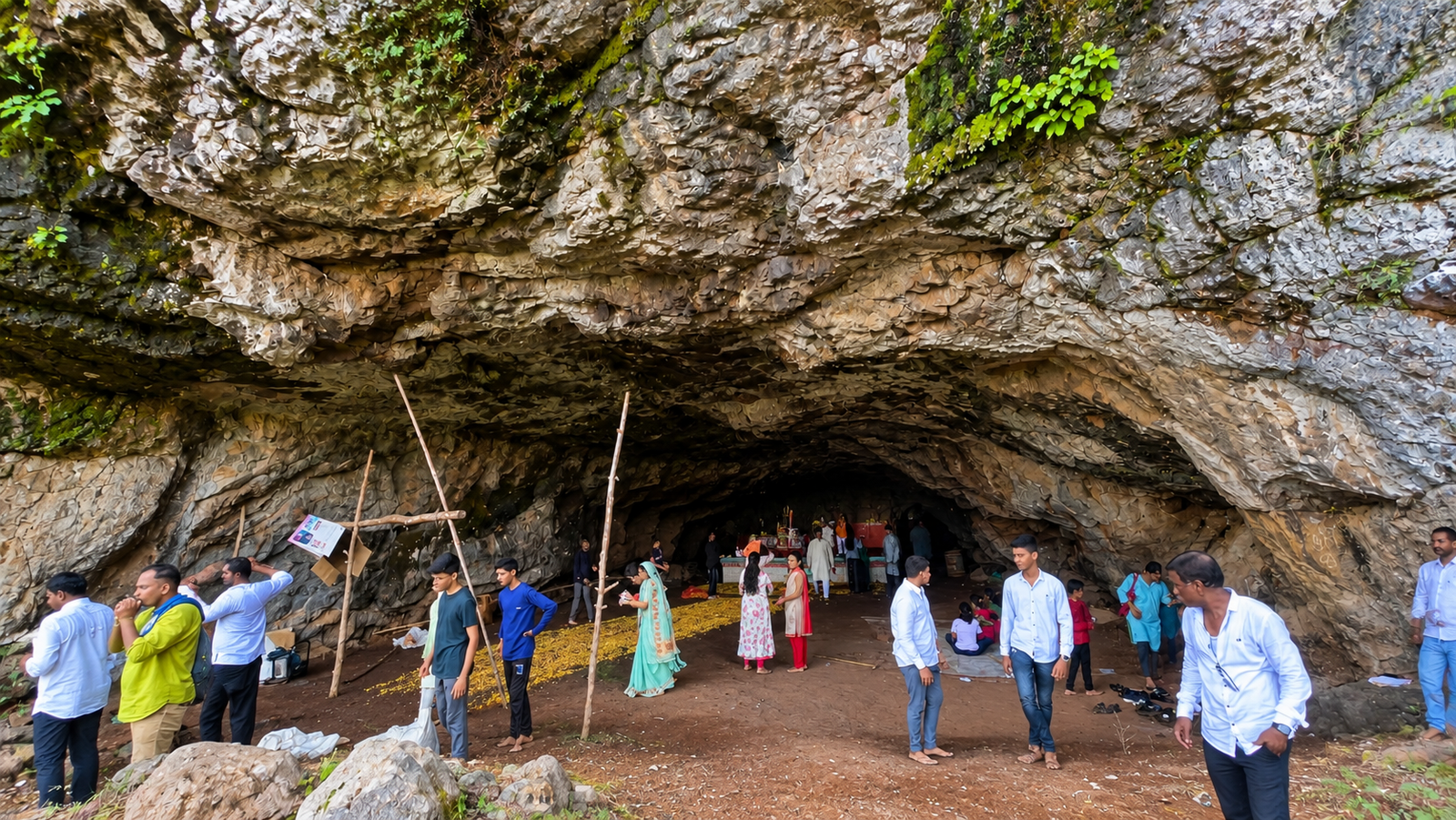
Unlike conventional temples, Khondai Devi's shrine is located within a large natural cave and has no traditional doorway. Inside the cave, the three-faced form of the goddess is worshipped as Khondai Mata, representing the divine presence of Mahalaxmi.
Ancient Cave and Local Legends
The area surrounding the temple is also associated with several fascinating legends. Near the river stands the temple of Kal Bhairavnath, while the Khondai Mata cave was once believed to provide a route towards Panashet in present-day Velha Taluka.
According to local accounts, the cave once contained seven passages or tunnels, along with wells featuring intricate carvings. Over time, these passages are said to have become filled with soil, concealing much of the ancient structure.
Another popular tradition tells of a time when devotees could request cooking vessels from the goddess when preparing naivedya, or sacred food offerings. The vessels were believed to appear when needed. According to the legend, this tradition eventually came to an end after some people misused and took away the vessels provided by the goddess.
For generations, devotees have continued to place their faith in Khondai Mata, believing that those who sincerely seek her blessings are guided and protected.
Navratri and the Khondai Devi Festival
Navratri is one of the most important occasions at the temple. The celebrations continue for nine days and are deeply connected with the traditional religious practices of the surrounding villages.
According to local tradition, the festivities reach an important stage after Dussehra, when the sacred ghat installed during Navratri is ceremonially lifted at dawn. This is followed by the traditional wedding ceremony of Kal Bhairavnath and Jogeshwari Mata, held at the Kal Bhairavnath Temple on the banks of the Mutha River.
On the third day of the wedding celebrations, the deity's palanquin procession begins its journey towards the Khondai Mata cave temple situated on the hill. Devotees accompany the procession as it makes its way through Shedgewadi and Malgaon.
The Khondai Sanstha and Bhairavnath Friends Association participate in welcoming the palanquin, adding to the festive atmosphere. After the goddess is worshipped with aarti, the procession returns towards Malgaon, where traditional sword-dance performances are held.
These performances attract large numbers of villagers as well as devotees and visitors from surrounding areas. Following the celebrations, the palanquin returns to the Kal Bhairavnath Temple near the river, where food is traditionally arranged for devotees.
A Place of Faith, Tradition and Natural Beauty
Khondai Devi Temple is more than an ancient shrine. It is a place where local faith, folklore, traditional celebrations and the natural beauty of the Mulshi hills come together.
The peaceful surroundings and the unique cave temple create a memorable spiritual experience for visitors. For devotees and those interested in the cultural heritage of the Mulshi region, a visit to Khondai Mata during the festival season offers an opportunity to experience a living local tradition.
The annual celebrations take place after Dussehra, making this an especially meaningful time to visit and witness the rituals, procession and traditional performances.
Photos: Team Mulshiparyatan
Information collected by: Team Mulshiparyatan
Information collected by: Team Mulshiparyatan
Use the map below for driving directions, trailheads, and real-time traffic updates from Pune, Mumbai, or Paud.